

Skip to Content

RV & Camper Battery Buying Guide

  • Extra Power for Off-Grid Living: Deep cycle lead acid or lithium RV batteries are the best way to power your camper when boondocking.
  • Adventurous Appliances: AGM batteries are more resistant to vibrations and extreme temperatures, making them perfect for those off-road camping adventures.
  • Affordable Weekend Getaways: Go for a dependable flooded or AGM lead acid battery for starting your RV.

RV Battery Types: Explained

There are three main types of RV batteries: starting, deep cycle, and dual purpose. Here is how to know which one your camper needs:

Starting

Starting batteries, just like car batteries, provide a burst of power to start the engine of your RV. In some campers, they run basic accessories like lights and radio.

Shop Starting RV Batteries

Deep Cycle

These batteries feature a heavy charge and discharge cycle, making them perfect for long-lasting power. If you're running appliances like a fridge, microwave or electric stove, a deep cycle RV battery generates the reliable, durable energy you need. Commonly referred to as “house” batteries.

Shop Deep Cycle RV Batteries

Dual Purpose

Looking for something that does a little of everything? Dual purpose batteries provide the strong starting power you need to start your engine, plus the cycling capacity to run your accessories smoothly.

Shop Dual Purpose RV Batteries

What Type of RV Battery Do I Need?

Application Deep Cycle or Lithium Dual Purpose Starting
Refrigerator  Deep Cycle AGM or Lithium Recommended for Refrigerator  Dual Purpose Recommended for Refrigerator Starting Not Recommended for Refrigerator
Microwave  Deep Cycle AGM or Lithium Recommended for Microwave  Dual Purpose Recommended for Microwave Starting Not Recommended for Microwave
Electric Stove  Deep Cycle AGM or Lithium Recommended for Electric Stove  Dual Purpose Recommended for Electric Stove Starting Not Recommended for Electric Stove
Engine Deep Cycle AGM or Lithium Not Recommended for Engine  Dual Purpose Recommended for Engine  Starting Recommended for Engine
RV Lights Deep Cycle AGM or Lithium Not Recommended for RV Lights  Dual Purpose Recommended for RV Lights  Starting Recommended for RV Lights
Communication Radio Deep Cycle AGM or Lithium Not Recommended for Communication Radio  Dual Purpose Recommended for Communication Radio  Starting Recommended for Communication Radio

RV Batteries by Capacity, Chemistry, and Size

Once you understand battery types, you can look into the best size and capacity for your RV.

Capacity: Capacity is how long the battery can store power and provide it under regular conditions. The more applications your RV has, the more amp-hours (Ah) your battery needs. A truck camper won’t need as much power as a class A motorhome. The average RV requires between 30 Ah and 150 Ah per day, based on class and appliances.

Chemistry: Chemistry determines how long a battery lasts and how fast it can recharge. Just as there are three different battery types, there are also three different chemistries available: flooded (wet cell) lead acid, Absorbed Glass Mat (AGM lead acid), and Lithium Iron Phosphate (LiFePO4).

Flooded Lead Acid Batteries AGM Lead Acid Batteries Lithium Iron Phosphate Batteries
  • Available in all three types: starting, deep cycle and dual-purpose
  • Shortest lifespan of the 3 battery chemistries
  • Require regular checks on the electrolyte levels inside the battery
  • Require distilled water be added any time the plates are exposed
  • Feature a high rate of self-discharge in storage
  • Available as a starting, deep cycle or dual-purpose battery
  • Last 2-3 times longer than flooded batteries
  • Completely sealed and require no electrolyte maintenance
  • Slower self-discharge than flooded batteries in storage
  • Charge up to 5 times faster than flooded batteries
  • More resistant to extreme temperatures and vibrations
  • Available only as a deep-cycle battery only
  • Last 4-5 times longer than a flooded battery
  • Completely sealed and can be installed in multiple configurations
  • Slowest self-discharge of the 3 battery chemistries
  • Charge up to 4 times faster than most AGM batteries
  • Most resistant to extreme temperatures and vibrations
  • Weigh 50% less than lead-acid batteries

Group Size: Last, size determines what battery can physically fit into your RV. A class A motorhome is going to offer more space than a pop-up or travel trailer. Battery dimensions do not always reflect capacity, as smaller batteries sometimes have a better Ah due to their chemistry. We recommend you carefully measure the space before changing to a battery from a different group size to ensure there’s room for ventilation. And don’t forget hold-down brackets and straps to keep the battery securely in place.

RV Batteries by Vehicle Class and Voltage

RV Voltage Details:

  • 12 volt systems only require 1 battery
  • 24 volt systems require 2 batteries connected in series
  • 36 volt systems require 3 batteries connected in series
  • 48 volt systems require 4 batteries connected in series
Vehicle Class Vehicle Description Voltage Typical Power System
Class A Large motorhome with appliances for bedrooms, bathrooms, kitchen, and living area 24-48 volt systems House batteries combined with solar or generators to power all systems; newer models may come standard with lithium batteries or banks of AGM batteries
Class B An exterior van body with a customized interior for outdoor adventures and recreation 12-24 volt systems House batteries combined with solar or generators to power all systems
Class C A van or small truck chassis with vinyl or aluminum exterior 12-24 volt systems Banks of AGM batteries; Lithium is not applicable when the house battery is used for starting
5th Wheel or Kingpin Non-motorized trailers that need to be towed; usually 30+ feet long 12-24 volt systems Banks of AGM batteries connected in series
Toy Hauler A towed trailer with a drop-down gate for ATVs and motorcycles 12-24 volt systems Banks of AGM batteries connected in series
Travel Trailer “Bumper tow” trailers of various lengths 12-24 volt systems Banks of AGM batteries connected in series
Pop-Up Small trailers which have a tent top extend or a roof pop up from the trailer base 12-24 volt systems Banks of AGM batteries connected in series

Comparing Top Camper Battery Brands

Tips to Maintain RV Batteries

All Seasons:

Clean corrosion from battery terminals using a simple mix of baking soda and water.

In-Season:

When camping or roadtripping, plug into shore power when it’s available. That will reduce draw on the battery when you use your RV accessories. And avoid deep discharging more than 50% of your battery’s full capacity, especially if off-grid boondocking.

Off-Season:

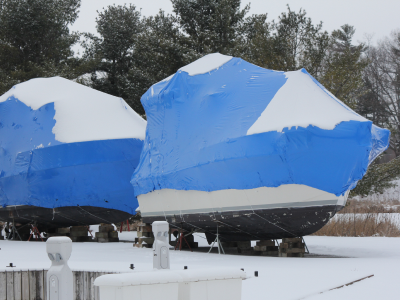
Remove and properly store your RV battery to prevent self-discharge in the off-season. Parasitic draw occurs when electronics are left plugged in or turned on. To avoid that, check if your RV has a battery disconnect switch. Otherwise, make sure to turn off and unplug all accessories when not using your RV.

Use a maintainer, tender, or charger to keep the battery charge around 75%-80% during the off-season. At minimum, you should check and charge the battery about once a month. If you have lead-acid batteries, you’ll need to fill the distilled water level to prevent off-gassing.